Cloud Architecture in 2026: AWS vs Google Cloud vs Vercel for High-Growth Startups
AWS vs Google Cloud vs Vercel: choosing between traditional hyperscalers (AWS/GCP) and modern frontend cloud platforms (Vercel/Cloudflare) — cost analysis, developer velocity, uptime, and scaling.
Quick answer
For frontend web applications and marketing sites, modern platforms like Vercel and Cloudflare deliver unmatched deployment speed, automated edge caching, and zero server maintenance. For heavy compute, proprietary AI training, and persistent relational databases, AWS and Google Cloud remain the enterprise gold standard. The winning modern architecture is hybrid: an edge frontend connected to robust, secure cloud backends.
Key takeaways
- Vercel eliminates 90% of DevOps overhead for Next.js applications, enabling rapid deployments and instant rollbacks.
- AWS and Google Cloud offer granular pricing and sovereign compliance for massive databases and enterprise compute workloads.
- Avoid premature microservices: a well-architected modular monolith running on serverless functions scales further with lower bills.
- Automated CI/CD pipelines with preview environments allow product teams to test features before touching production.
Architecting your technology stack in 2026 presents an overwhelming number of choices. Should you deploy directly onto AWS, take advantage of Google Cloud's AI and data capabilities, or host your frontend on modern edge platforms like Vercel and Cloudflare?
Make the wrong choice early, and you'll either drown in complex DevOps configuration or face eye-watering bandwidth invoices when your application scales.
Here is an architectural comparison and our battle-tested blueprint for high-growth startups and established enterprises.
Vercel: unmatched frontend velocity & edge delivery
If your web application or marketing platform is built on Next.js, Vercel is the natural home:
- Instant global CDN: Static pages and images are deployed automatically across hundreds of edge locations worldwide.
- Git-driven preview environments: Every pull request gets a live preview URL, allowing design, marketing, and engineering to collaborate seamlessly before production release.
- Zero server maintenance: No operating system updates, no NGINX reverse-proxy configuration, and no manual SSL certificate renewals.
- Watch out for: Serving massive raw video files or uncompressed downloads through Vercel bandwidth can get expensive. Offload static media to AWS S3 or Cloudflare R2.
AWS: the undisputed sovereign compute powerhouse
Amazon Web Services (AWS) remains the backbone of the global cloud:
- Depth of services: From managed PostgreSQL (RDS/Aurora) to serverless queues (SQS), event buses (EventBridge), and scalable container compute (ECS Fargate).
- Enterprise compliance: ISO, SOC2, and Indian data localization compliance are supported out of the box.
- Cost predictability at scale: When running predictable, 24/7 background compute jobs or multi-terabyte databases, AWS reserved instances offer massive cost savings over managed PaaS platforms.
- Watch out for: IAM permissions complexity and the steep learning curve required to avoid misconfigured security groups.
Google Cloud (GCP): the leader in data & AI workloads
Google Cloud stands out for applications with heavy data analytics and generative AI integration:
- BigQuery: Serverless, petabyte-scale data warehousing that allows real-time analytics on billions of user events without managing clusters.
- Vertex AI & Gemini API: First-class native integration with Google's state-of-the-art multimodal AI models.
- Cloud Run: Perhaps the simplest and most cost-effective way to run containerized backend microservices that scale to zero when idle.
The recommended hybrid architecture for 2026
At Zynetechs, we architect systems using the best strengths of each ecosystem:
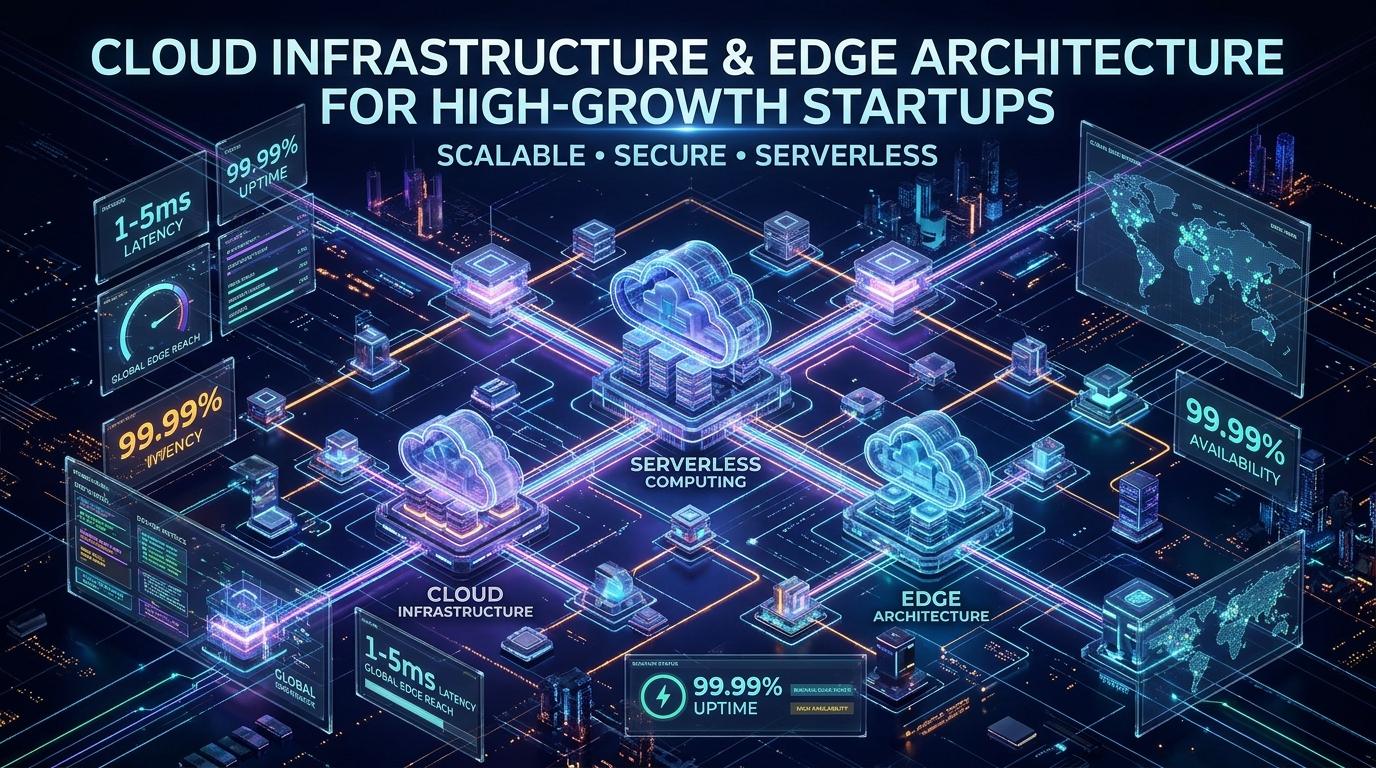
1. Frontend & Edge Layer (Vercel / Cloudflare): Next.js pre-rendered HTML, caching, and edge routing for sub-second user response times worldwide. 2. Backend Microservices (AWS ECS / GCP Cloud Run): Containerized Python or Node.js APIs handling business logic, payment webhooks, and asynchronous jobs. 3. Database Layer (Managed Serverless Postgres): Connection-pooled relational database with automated daily point-in-time recovery. 4. Media Storage (AWS S3 + Cloudflare CDN): Ultra-low-cost asset hosting with zero egress fees.
Build a cloud infrastructure that scales with you
Whether you are migrating away from legacy servers, optimizing your monthly cloud bills, or launching a new product from scratch, Zynetechs designs resilient, high-speed cloud infrastructure. Book a free consultation to review your technology architecture.
Frequently asked questions
Quick answers about enterprise & cloud from the Zynetechs team.
Vercel is very cost-effective when bandwidth is used properly with edge caching and static generation. For sites serving terabytes of raw video or file downloads, pairing Vercel with Cloudflare R2 or AWS S3 keeps bandwidth costs minimal.